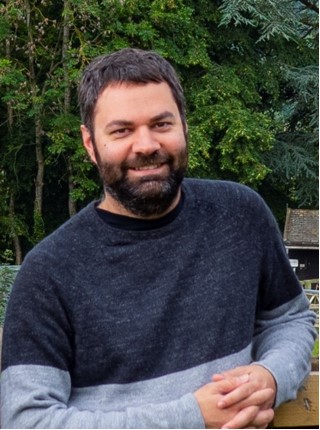
Anthony Darrouzet-Nardi
Associate Professor, University of Texas at El Paso (UTEP)
Anthony Darrouzet-Nardi is an ecosystem ecologist and biogeochemist whose research focuses on belowground processes in drylands—biocrusts, soil C and N cycling, and plant-soil interactions—using field experiments, sensors, stable isotopes, and many other methods. He is currently an associate professor at UTEP, where he mentors students in ecological research and teaches a variety of classes ranging from introductory biology to a scientific visualization class for graduate studednts. His group works on interdisciplinary topics such as the study of dryland critical zones to link mechanism to ecosystem function and change. His CV is here. To learn more about his interests, check out this Science Moab podcast episode.
CURRENT LAB
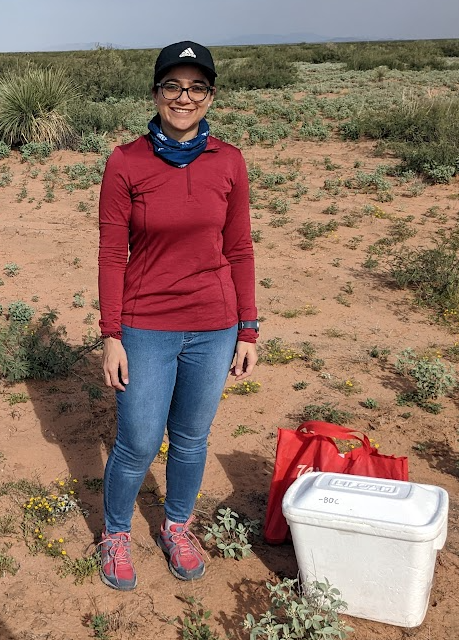
Kalpana Kukreja
Ph.D. student
Kalpana's Ph.D. work focuses on quantifying metabolites in soils using targeted and untargeted metabolomic analyses, particularly the role of organic acids in phosphorus acquisition in drylands.
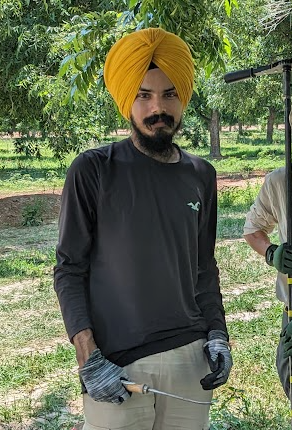
Talveer Singh
Ph.D. student
Talveer's Ph.D. work focuses on the belowground plant physiological components of carbon cycling and carbon budgets within our dryland critical zone network of sites.
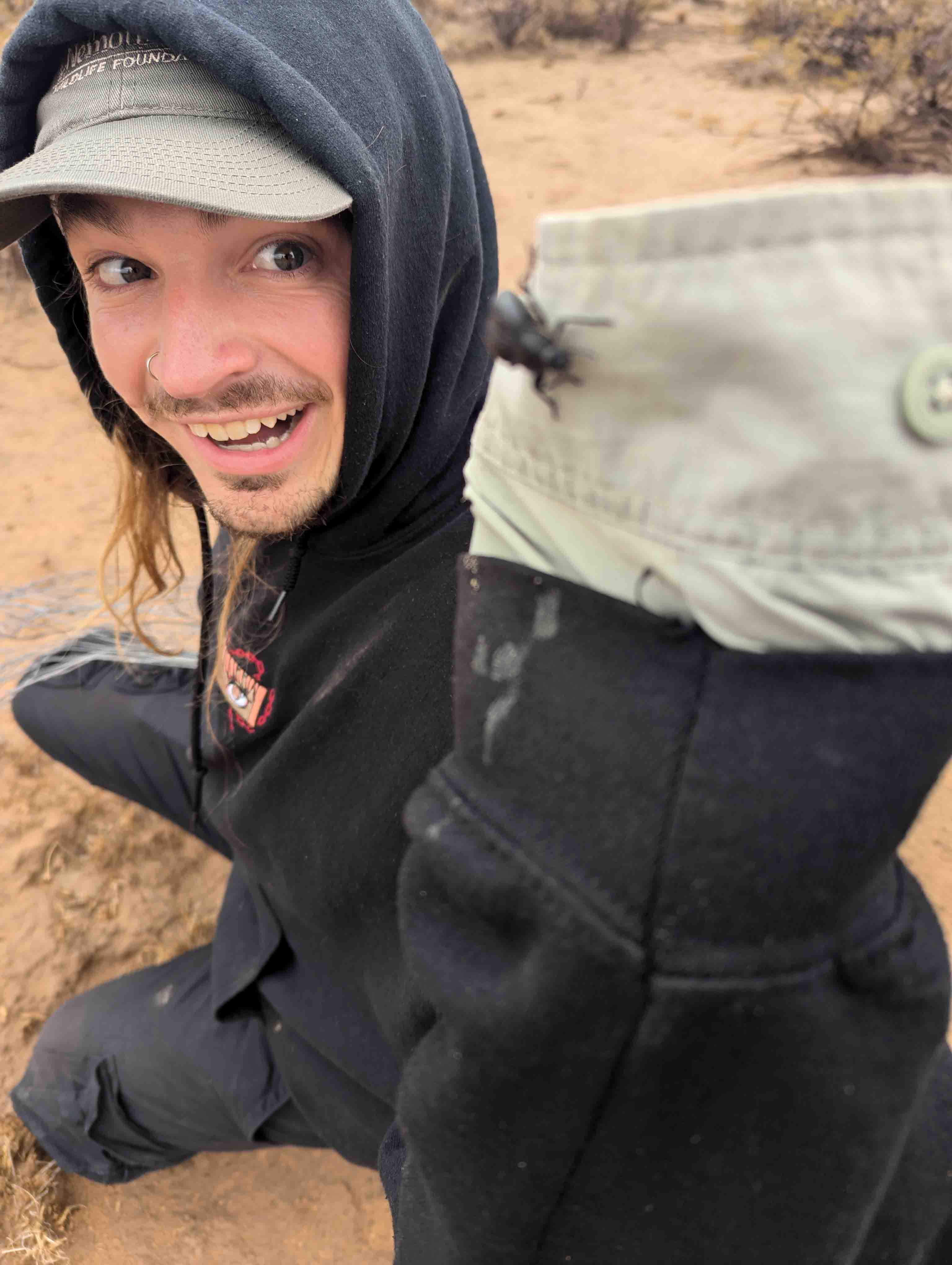
Kai Schmitt
Technician
Kai works primarily on our critical zone project, maintaining sensors and supporting graduate student projects. He has also been instrumental in getting CrustNet off the ground.
Alizae Watson
RaMP/ROADS Post-bac
Alizae is working on sequencing DNA from our Dryland Critical Zone project's deep cores: 100 m deep from Red Lake Playa and 50 m deep at our pecan orchard site.
LAB ALUMNI - PH.D.
Kristina Young
Ph.D. in Ecology & Evolutionary Biology, July 2021
Kristina's Ph.D. work focused on soil nutrient flux in biocrusts on the Colorado Plateau. She also explored applying biogeochemical approaches to improving dryland restoration. Kristina is currently an Assistant Professor in the Integrative Biology Department at the University of Wisconsin, Madison.
Jane K. Martinez
Ph.D. in Ecology & Evolutionary Biology, May 2023
Jane's Ph.D. project focused on soil enzyme activities in Arctic tundra ecosystems. She collected samples from the Barrow, Alaska area and investigated the microsites within the soil in which enzymes are operating as well as working on some proteomic analysis to work towards identifying the enzymes. Jane works currently on the Texas Water Development Board.
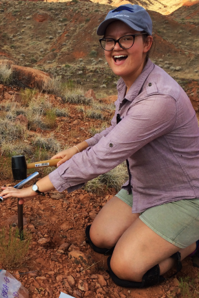
Catherine Cort
Ph.D. in Ecology & Evolutionary Biology, December 2023
Cat's Ph.D. work focused on our fungal loop project where she took a core role in implementing our tracer studies of C and N translocation in the biocrust–plant–fungal system of dryland soils. She also studied fungal genetics and worked to expand our knowledge of the types of fungi that are ecologically important in drylands. Cat is currently working in environmental consulting in the El Paso, Texas and southern New Mexico area.
LAB ALUMNI - M.S.
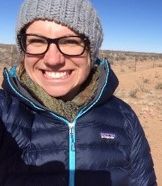
Grace Crain
M.S. in Biology, August 2018
Grace's master's project focused on the role of phosphorus in biocrust-dominated soils. She studied fractions of phosphorus and used radiolabel to track the incorporation of phosphorus into soils from the Jornada Experimental Range. She also contributed to several parts of the fungal loop project, especially a collaborative study of the natural abundance isotope ratios of cyanobacterial filaments.
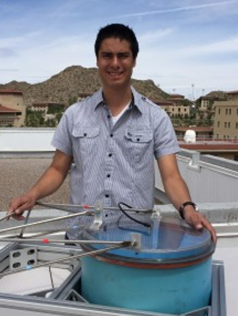
Alejandro Lara
M.S. in Environmental Science, July 2020
Alex's master's project focused on developing automated CO2 chambers that are used to explore partitioning of CO2 fluxes from soils at a site on the Jornada Experimental Range.
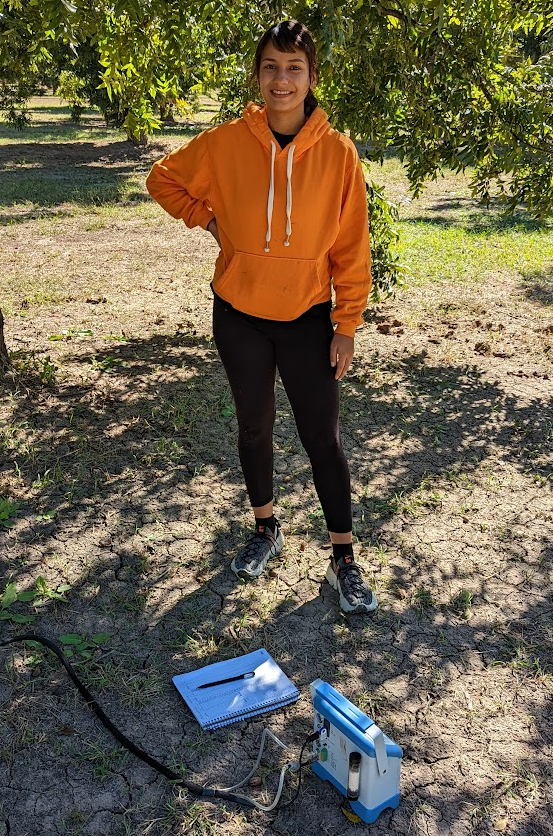
Viridiana Orona
M.S. in Environmental Science, May 2023
Viri's master's work focused on quantifying spatial variation in CO2 in dryland soils at our critical zone sites.
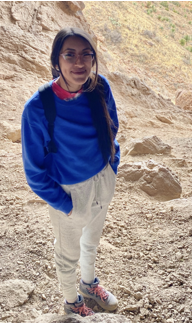
Briana Salcido
M.S. in Environmental Science, May 2023
Briana's M.S. work focuses on temporal CO2 soil efflux dynamics in response to rainfall and irrigation events at our critical zone sites.
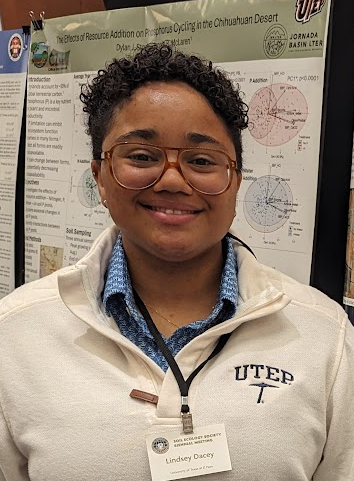
Lindsey Dacey
M.S. in Environmental Science, May 2024
Lindsey's M.S. work focused on understanding plant water availability within our dryland critical zone network of sites.